
Payment insights · Blog
Who’s In Charge When Software Starts to Pay?
For as long as there have been payments, there has been a person behind every single one. Someone signs the cheque, taps the card or presses "confirm". As a result, the controls that we rely upon to keep our payments safe all assume that a person is there choosing to make the payment.
That assumption however, could soon be obsolete. As agentic payments gain traction, AI agents are beginning to buy, book, reorder and rebalance on people’s behalf. Soon a treasury agent will move liquidity overnight, and a procurement agent will pay a supplier the moment goods arrive, without anybody pressing a button.
This raises important questions for the banking and payments sector as well as for their regulators. When payments are made, the infrastructure behind them will no longer need to confirm if the payment is valid, but rather if someone said “yes” to this payment being made and whether or not that can be proven.
The Broader Direction of Travel
The move towards agentic payments is part of a broader era of change within payments. We are also seeing new forms of money being taken more seriously, as stablecoins and tokenised deposits move from experiment into treasury and cross-border flows. And with instant account-to-account rails such as SEPA Instant in Europe, RTP and FedNow in the US and FPS in the UK becoming the default in an increasing number of markets, payments now settle in seconds making them much harder to pull back if something has gone wrong.
Putting immediate settlement alongside agentic payments and digital money is exciting but creates new risks. Not only does the time in which fraudulent or erroneous payments can be caught decrease, but removing humans from the process also removes some of the typical checkpoints that can make these easier to catch. Despite the removal of humans from some payments, banks still need to be able to monitor payments as they happen, not after the fact when it is too late.
So how can the industry build trust and safety into this new era of payments?
The Agent Proposes, but It Does Not Decide
Our view at Form3 is simple. The controls on agentic payments cannot live inside the agent itself. Agents can be wrong, fooled or hijacked, and they are probabilistic by their very nature. This isn’t suitable for payments, which need repeatable, consistent controls that work every time.
As a result, the agent should propose the payment, and then the bank or fintech should set the rules, such as limits, approved beneficiaries, rails and approval thresholds. A deterministic layer that sits outside the agent should then check every payment against those rules before any money moves and keep signed evidence of what was authorised and what was executed.
Card networks are already building these protections for cards, but for account-to-account payments, no neutral provider currently checks agent payments across every rail.
This is what we are developing at Form3, building on our decade of experience in building banking-grade, resilient payments technology. The creation of a neutral, trusted layer to provide vital checks will enable banks and fintechs to embrace agentic payments with greater confidence and regulator trust.
Similarly, stablecoins and tokenised deposits should be held to the same controls and evidence standards as traditional bank payments. We must bring these new forms of money up to the standards of safety and resilience that customers have come to expect, rather than lowering those standards in the interest of a shiny new toy.
Proof of a Human, without Undue Friction
Within this rules-based system that we propose, the system can determine whether a payment is allowed against the set of rules, but to complete the picture, we should also know whether there is a real person behind a payment.
Deepfakes and synthetic identities continue to improve, rendering passwords, one-time codes, and trusted devices less meaningful. This is why Form3 is partnering with Realeyes, a London-based specialist in human verification, whose VerifEye technology uses a selfie of a few seconds, on an ordinary camera, to confirm that a real, live, correct person is present.
But how does this apply to agentic payments where a person isn’t present?
Realeyes puts a face on agents, so when needed a check can be traced back to its owner. Most agentic payments run within policy, but in key moments such as when an owner grants an agent authority to pay or when a payment crosses a set threshold, the biometric check can go back to a human, and a record of the approval is taken and stored.
With this “managed delegation” approach, the agent is able to continue with routine work that falls inside the rules, and the human verification is called only where risk level of action threshold met.
Biometrics alone will not solve all of the trust challenges that come with agentic payments but having rules that are anchored to a verified human, enforced by deterministic checks and backed by signed evidence, is a stronger answer to "who said yes to this payment?" than anything our industry has at the moment.
More positive way to say the same thing?
More relevant that it’s the right known person in this use case context?
Building New Features on Solid Foundations
None of this is credible or possible without a strong technological foundation. Form3 already processes more than 5 billion payments a year for banks, payment service providers and fintechs. Our platform also runs across three major cloud providers, AWS, Google Cloud and Azure, to ensure that a single cloud outage does not stop us from processing payments.
This level of resilience is even more important when it comes to agentic or stablecoin payments, so building these capabilities on top of an already trusted and highly resilient platform is the next logical step.
The next decade of payments will depend on trust more than ever. The technology to let machines move money already exists, so what our industry must build now is the confidence to let them.
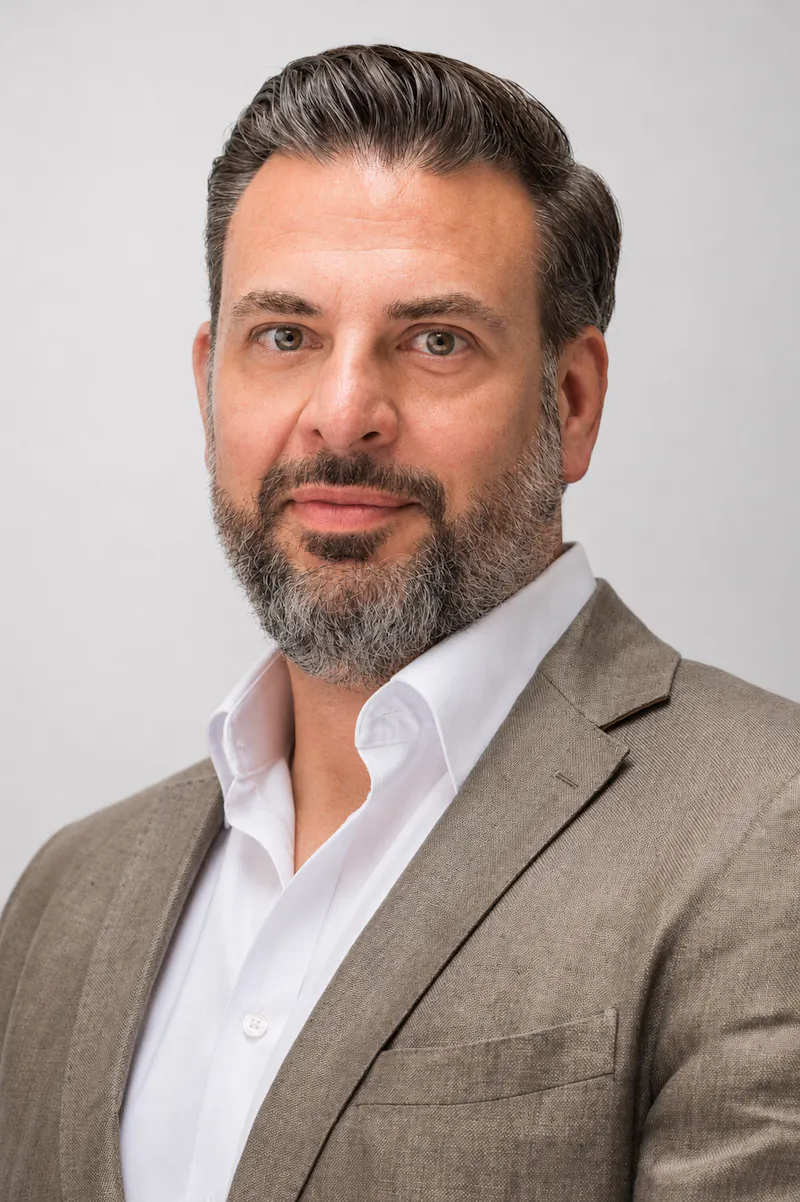
David Scola
Chief Product Officer, Form3

David Scola is Chief Product Officer at Form3, where he leads the company’s global product strategy and innovation agenda. Since joining Form3 in 2022 to spearhead its expansion into the United States, David has played a key role in extending the company’s reach and helping financial institutions modernize their payments infrastructure through cloud-native technology.
With more than 25 years of experience across transaction banking, payments, and financial market infrastructure, David has built and led businesses at the forefront of industry transformation. He brings deep expertise in helping banks navigate change, embrace new technologies, and deliver secure, scalable payment services in an increasingly digital world.
Before joining Form3, David served as Chief Executive for the Americas, UK and Ireland at SWIFT, where he was responsible for some of the organization’s largest client relationships and its global securities business.
Previously, he was Global Head of Financial Institutions at Barclays, overseeing correspondent banking, trade finance, flow FX, and liquidity management. Earlier in his career, he held senior product and strategy roles at Deutsche Bank and The Bank of New York.
David holds an MSc in Development Economics from the School of Oriental and African Studies, University of London, and a BSFS in International Relations from Georgetown University.